


How to Store a Refrigerator in Storage
Appliance and fridge storage is a great way to keep your valuable whitegoods in top condition while moving, travelling, or renovating.
From learning how to prepare a fridge for storage to nailing the perfect technique for moving fridges between your kitchen, car and storage unit without compromising your back, there are various steps you can take to prevent damage to your unit’s coolant and ensure it’s ready to preserve your food. The various steps involved include:
- Step 1: Cleaning interior and exterior surfaces to prepare for storing a fridge long-term
- Step 2: Transporting your fridge safely
- Step 3: Choosing the right storage unit for your fridge
- Step 4: Position your fridge properly for safe storage.
Follow our step-by-step guide on how to store a fridge in storage and at home to keep it secure and in working order when you need it again. We’ve made it into a helpful checklist to make planning your move that much easier.
How to clean your fridge


Preparing any refrigerator for storage starts with giving it a good clean and dry to prevent the growth of bacteria, debris, and odours.
- 1. Remove all items from the fridge: It may sound obvious, but be sure to remove all food and items before cleaning your fridge. It will make it much easier to clean every surface thoroughly and ensure you don’t return to any surprises later.
- 2. Turn off your fridge: Turn it off and unplug it from the wall a day before cleaning. Your refrigerator, especially the freezer, should be entirely defrosted and show no signs of ice and moisture.
- 3. Drain water: This step is easily forgotten when figuring out how to store a fridge, but emptying water dispensers will not only prevent leaks and damage, but it also stops water from turning stale and odorous.
- 4. Remove shelves and drawers: Take out any removable shelves and drawers and soak them in warm water and dishwashing soap. Cleaning refrigerator shelves may be easier outside rather than in the kitchen sink.
- 5. Wipe down all surfaces: Wipe all surface areas with a microfibre cloth, warm water and dishwashing soap. Cheap sponges can leave little plastic particles behind, so avoid using these in your fridge.
- 6. Remove stains: For those tougher spots, combine baking soda and water to create a paste and leave it to activate for 30 minutes before wiping clean with the microfibre cloth. Avoid using bleach, which can degrade surfaces designed to be food-safe.
- 7. Wipe down the outside: Give the chassis of your fridge a good wipe down with a microfibre cloth, warm water and dishwashing soap. Wipe dry to prevent streaking.
- 8. Allow your fridge to dry: Wipe the inside of your fridge dry and leave the door open to assist with drying.
- 9. Deodorise: You can prevent unpleasant smells by leaving a plastic cup or container of baking soda in your fridge to absorb any strong odours.
Once your fridge is clean, dry, and free from any smells, it’ll be ready to be placed into your appliance and fridge storage.
Discover more appliance storage tips in our Storage Guide: How to Store Appliances.
How to transport your fridge safely
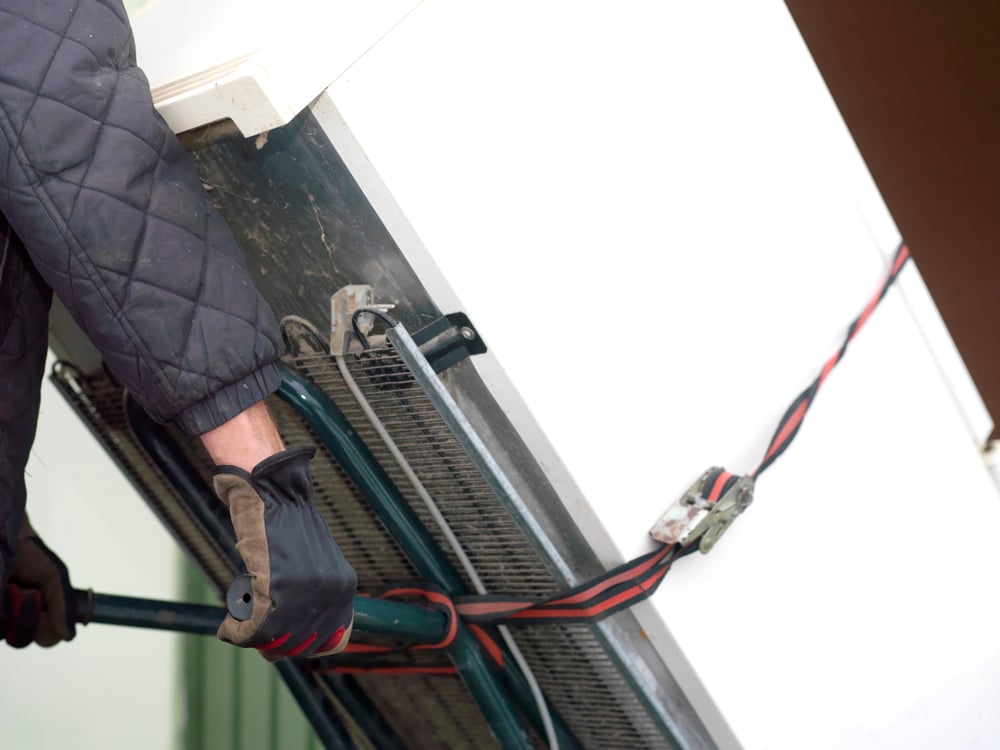

When it comes to moving fridges and appliances into storage, there are several steps to follow to avoid damaging your fridge and injuring yourself.
- 1. Unplug all electrical cords and components and securely place them in a bag or box with your fridge.
- 2. Tape fixed cords down to avoid them dragging or pulling.
- 3. Remove storage compartments, ice trays, and other removable elements to avoid damage. Wrap in bubble wrap or packing paper and place in a labelled box with your fridge.
- 4. Tape doors down during storage to prevent them from swinging open.
- 5. When loading and transporting a fridge, it’s always best to keep it upright to avoid damage to the sealed system. Depending on the model, this can also prevent gas loss and water from running back into the appliance and causing damage.
- 6. If you have to tilt your fridge briefly to move it, leave it upright for at least a few hours before plugging it in and turning it on again.
- 7. Use a moving blanket to avoid scratches or damage during transit.
- 8. Ask two friends to help you move your fridge. Having multiple people on hand will prevent injury by distributing the weight evenly and reducing the workload.
- 9. Move your fridge using dollies, trolleys, and moving straps.
- 10. When loading your fridge into a truck, ute, or trailer, it’s best to have one person in front to pull, and another behind to push.
- 11. Brace your fridge in the corner of your truck, ute or trailer with moving straps.
- 12. Drive carefully when transporting your fridge, avoiding sharp turns, speed bumps, roundabouts, and sudden acceleration or braking.
Different fridge makes and models can require different care, so always remember to follow the manufacturer’s instructions. If transporting bulky items feels a little too awkward, follow our guide on moving big items without breaking your back.
Can I lay my fridge down for transport?
No — it should always remain upright, even for a short time during transport. Storing a refrigerator on its side can cause oil to leak from the compressor into the cooling system, causing misalignment and damage to the internal mechanisms, leaving it unusable.
If you need to tilt your fridge briefly for transportation, leave it upright for at least a few hours before turning it on to allow the oil and cooling system to settle back in place. Remember to follow your model’s specific moving instructions to prevent damage, as some models, such as compact fridges, can’t be placed on their side under any circumstances
Choosing the right storage unit for your fridge


When choosing appropriate appliance storage, there are a few things to keep in mind to ensure your fridge stays clean, dry, and in good condition:
- Appliance storage size: Choose a storage unit with a clearance tall enough to accommodate your fridge’s standing height.
- Temperature and humidity: Avoid damage caused by moisture build-up by opting for a climate-controlled storage unit. These control humidity and temperatures to keep your fridge clean and dry, prevent seals from oxidising and avoid the internal cavity from developing an odour.
Get a better idea of our storage unit sizes for productively storing a fridge and other belongings.
How to position and prepare your fridge for storage


After transporting a refrigerator, it’s key to consider how you’ll position your appliance in storage to avoid damage and ensure it’s in good working order when you need it again.
- 1. Store your fridge upright to avoid damage to the inside mechanisms and sealed systems.
- 2. Keep the door open or ajar to prevent odours and moisture build-up. Don’t place anything between the door and the fridge to keep it open if it pushes against the seal — this can damage the seal.
- 3. Cover your fridge in a moving blanket or sheet to prevent dust and damage.
Keep your fridge cords and accessories stored neatly inside the fridge on a shelf. This keeps everything together and prevents anything from getting lost or taking up unnecessary space in your storage unit.


Want to use your storage space more productively? Follow our top tips for packing your belongings for short- and long-term storage.
How long can I store a fridge for?
Refrigerators generally don’t have a specific lifespan. If you’ve taken the correct steps to safely store your fridge, chances are it’ll still be running when you plug it back in even years later!
Ready to store your fridge the right way?
Properly storing a fridge takes some prepping, but with the right techniques and storage solutions, you can protect your appliances and keep them running smoothly for years to come.
Whether you’re renovating, moving, downsizing, or simply need more space, National Storage offers safe, secure, and convenient storage options across metro and regional Australia. At your closest centre, you can access trailer hire services, packing materials, and driveway storage units, which make it convenient to unload your belongings directly from your car.
We don’t just make it easy to keep your valuables secured away — they’re easy to access whenever you need them. Reserve your storage unit online or call 1300 942 130 to get started.


 Storage unit
  Wine storage
  Vehicle storage

