


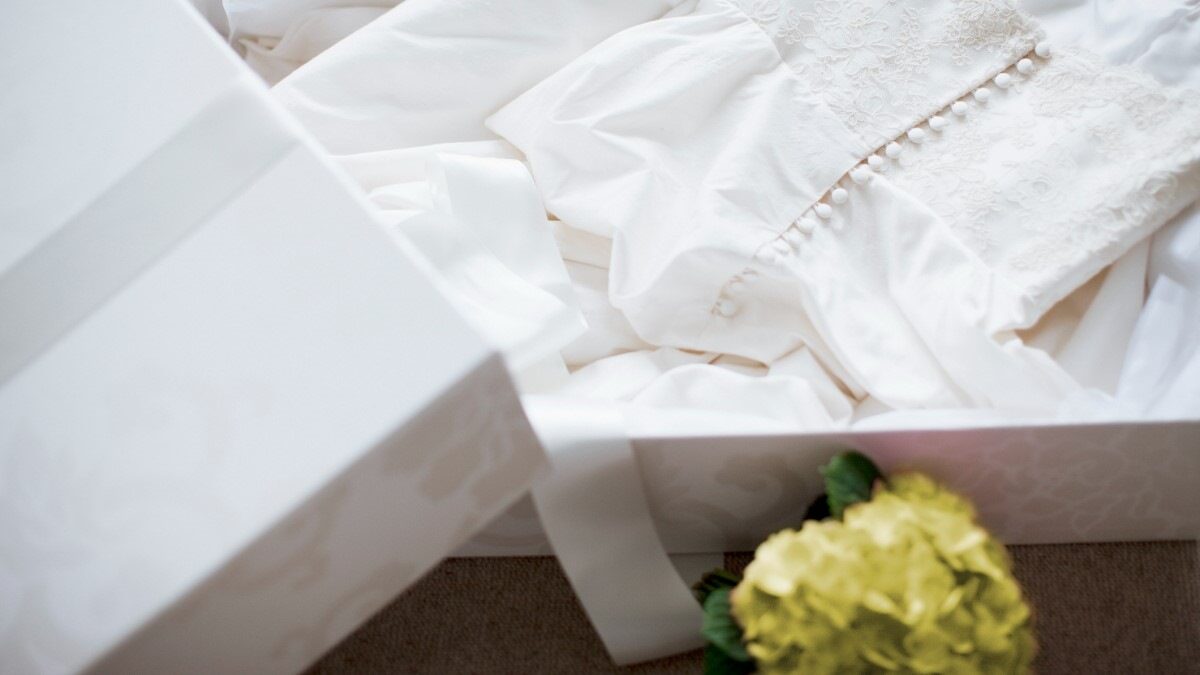

Your wedding gown is more than just fabric, threads and beading — it’s weeks and potentially months of work crafting a symbol of one of life’s most cherished moments. However, for many brides, it’s not a dress they own but one they hold onto in the hopes of creating a new family heirloom and passing it down from daughter to daughter. Unfortunately, without careful and proper storage, wedding dresses are prone to yellowing and fabric deterioration, leaving you with an upsetting surprise the next time you pull it from the back of your wardrobe.
By taking a moment to learn how to store a wedding dress, you can ensure it remains as pristine as the day you wore it. Whether you plan to keep it as a sentimental keepsake, repurpose it into an ensemble you can wear again, leave it for future generations, or even resell it, our guide shares everything you need to know about wedding gown storage and preservation.
What happens if you don’t preserve a wedding dress?
The longevity of your bridal gown largely depends on the environment where it’s kept. Showing little care and quickly tucking it in a drawer or inside a plastic covering can accelerate the ageing of the fabric, leading to discolouration, warping, and even pest damage. Some of the most common issues that arise include:
Yellowing fabrics
Over time, white and ivory gowns can develop an unfortunate yellow tinge, often due to light, humidity, and sweat exposure.
Fabric warping and weakening
Poor storage can lead to permanent creases, weakened fibres, or stretched areas that alter the dress’s original shape. You might even think leaving it on a padded hanger is safe. However, if your gown rests in an unnatural position, it can strain the garment’s pattern, causing further buckling and distortions.
Mould and mildew growth
Storing a wedding dress in a damp or humid area can encourage mould and mildew growth, leaving irreversible stains and embedding unpleasant odours deep in the fabric.
Stains worsen over time
Your big day was a huge celebration full of dancing, Champagne toasts and sweet treats. No matter how careful you were on the night, perfume, sweat and sugar spills stain the fabric even when they can’t be seen. With time and after oxidising, these accidents darken with age and can permanently tarnish their original crisp finish.
Pest infestations
We know you love your gown, but unfortunately, you’re not the only one who does. Moths and other insects are attracted to natural fibres, sweat and sugars left over from spills — if it hasn’t been cleaned — making unprotected dresses susceptible to damage.
How to Store a Wedding Dress After the Wedding
Step 1: Clean the Dress Before Storage
Before storing your dress, thoroughly cleaning it from dirt, oils, perfume, makeup, and other hidden stains should be your biggest priority. In fact, you want to remove all traces of the big day, leaving only your memories.
Professional Cleaning vs. DIY Cleaning your Wedding Dress
Consumer-grade solvents may be great for your everyday wardrobe, but they can be too harsh on the delicate fabrics of a wedding dress. Likewise, while excessive scrubbing and soaking can often remove stains, they can weaken fabrics too. Professional dry-cleaning is recommended to adequately treat the garment without causing damage. Expert care is essential to safeguard fine fabrics like silk, tulle, and lace
You might be a pro in the laundry and have had to do some spot DIY cleaning (using a mild detergent and distilled water) on the day — what you can achieve cannot compare to the specialised machines, cleaning agents, and expertise of a professional service. After all, you already invested a considerable amount into your gown — why risk it?
Step 2: Choose the Right Storage Materials
Your wedding dress storage matters — learning how to preserve fabrics can make the difference between a gown your daughter can wear and one that makes your emotions drop over its condition. The storage materials you should consider and those you need to avoid include:
Padded Hangers for Short-Term Storage
If you’re storing your bridal dress briefly, a padded hanger can help reduce the strain on fabrics more than thinner, conventional kinds. Try to limit the time it’s left hanging, as multiple layers of fabric, beading, and other decorative elements can cause your gown to drag and stretch. Even worse, it can happen disproportionately, warping it in different areas.
Avoiding Plastic Covers and Vacuum-Sealing
You might think that loose plastic and vacuum-sealed garment bags are protective, but they trap moisture, making it easy for your gowns to turn yellow and become an incubator of mould and mildew.
Acid-Free Tissue Paper and Boxes
Ordinary tissue paper and cardboard contain acids that can cause yellowing and fabric breakdown. To prevent deterioration, always use acid-free and archival options to cushion the dress.
Preservation Boxes
Considered one of the best materials for long-term wedding dress storage — only beaten by professional, climate-controlled self-storage — preservation boxes host your gown in an acid-free environment with less risk of stretching and distorting.
Step 3: Select the Best Location to Store Wedding Gowns
Figuring out how to store a wedding dress isn’t so complicated when you know where to look. Like all delicate items, temperature fluctuations and humidity can run havoc on finely woven tulle, lace and silk. Instead, select a location with a consistently cool temperature that’s dry and free of exposure to humidity and UV. For most people, that means garages, sheds, attics, and basements are out of the question.
But when archival boxes appropriately sized to fit a bridal dress can be oversized and bulky, where can you actually store wedding gowns?
Professional storage units offer the best type of wedding gown storage that brides, former brides and brides-to-be can hope for. Self-storage providers like National Storage are trusted facilities that provide more than just security — they help manage the environment throughout their premises, ensuring your gowns are generally untouched by humidity, temperature changes and UV exposure. By placing your treasured property in a storage facility that safeguards the integrity of your garments, you can feel confident knowing your gown can live on with your daughter, and if celebrations aren’t too crazy, your granddaughter too.
Step 4: Periodic Maintenance and Dress Inspection
The balloons have long been deflated, and your dress has been in storage for months or years already — surely that’s all you have to do? Almost, but this is where the fun part comes in.
Routinely Check for Signs of Damage
Even with proper storage, wedding dresses should still be inspected periodically to spot signs of yellowing and other issues. Early detection allows you to intervene quickly, helping you prevent permanent damage — not to mention, it’s an excuse to try it on and play dress up.
Re-package your Wedding Gown
It’s great you’ve checked on its condition, but it’s also important to make sure it doesn’t become a victim of its environment either. After inspecting your bridal gown, gently refold and reposition it to avoid permanent creases. You may want to give its packaging material a second look and decide whether it needs replacing with archival, acid-free materials.
When to Seek Out Re-Preservation Services
If you’ve noticed your bridal regalia looking less than flawless, especially if there is a difference in appearance since you last inspected your gown, consider sending it off to specialist dry cleaning or wedding dress preservation services. They can best help you halt the signs of damage and restore your bridalwear back to an optimal state.
Organising your Storage for Wedding Attire
Depending on your ensemble and styling choices, many bride’s jewellery, shoes and accessories scream wedding and cannot be repurposed for other occasions. You may even want to keep them too to share with your daughter.
After placing your accessories in acid-free paper or anti-tarnish pouches and bags to prevent scuffs and tarnishes from oxidation, it’s important to ensure they’re stored alongside your gown to prevent items from being lost. Consider using an oversized box or tub to group bridal pieces together. However, it’s a great idea to separate each item to prevent colours or, even worse, blemishes from bleeding onto each other.
Safeguard your Wedding Dress and Memories with National Storage
A bridal gown is a precious keepsake deserving proper care to maintain its brilliance for years to come. By cleaning it thoroughly, holding it in the right storage materials, and utilising the best type of wedding dress storage possible, you can not only preserve memories of the most important day in your life but also allow your children to inherit them.
For many brides, finding ‘the one’ wedding gown that makes your heart skip a beat is too important to leave it to creative ways to store clothes. To confidently preserve your wedding dress for generations to come, trust National Storage’s long-term self-storage units to store and protect your most treasured heirlooms. Whether you opt for a climate-controlled storage unit or prefer to keep it in your own self-storage space, you can have peace of mind knowing it’s in the best place, free from environmental threats.
Protect your memories today — book your self-storage unit today!


 Storage unit
  Wine storage
  Vehicle storage

